
Raise a cheap standing desk to its full height, rest both hands on the surface, and type a full sentence. On a good number of them, you'll feel it before you see it: a faint, springy give under your palms, like the desk is thinking about the sentence along with you. That's not really a defect. It's physics: a tall, thin steel column extended near its limit, doing exactly what an unsupported column does under lateral load.
Whether that happens depends on one spec that almost never makes it into the hero image: how many motors are actually doing the lifting, and how they're connected to the legs.
The Word "Motor" Is Doing Unpaid Work
A single-motor desk, still the more common and more affordable design, uses one motor connected to both legs by a rotating rod that runs underneath the desktop. Press the button, and that rod spins, raising both legs together. It's a clever, cost-effective piece of engineering, and it's been good enough for millions of desks. It's also, mechanically, a single source of flex: one motor working through a shaft has to move the entire load, and the rod itself has a little give in it, especially near the top of the desk's height range—exactly where most people are standing and typing.
A dual-motor desk swaps that shared shaft for two independent motors, one in each leg, synchronized electronically instead of mechanically. There's no rod to flex, because nothing needs to turn in unison; each leg lifts its own share of the load. The practical result, visible in pretty much every manufacturer's own spec sheet: dual-motor frames typically carry meaningfully more weight—often 220 to 275 pounds, against roughly 154 to 176 pounds for single-motor frames from the same brands—and hold steadier at height, particularly under an uneven load like an off-center monitor arm.
None of this is secret, exactly. It's just quiet. The same handful of direct-to-consumer furniture brands sell single-motor and dual-motor versions of what looks, in the product photo, like essentially the same desk: same steel legs, same laminate top, same stock photo of someone typing contentedly at standing height. When "dual motor" genuinely applies, brands tend to put it right in the title, because it's the more expensive part to engineer and nobody buries a feature they paid for. When it doesn't apply, the listing usually just doesn't bring up motors at all—a much easier detail to skip past than it would be to lie about outright.
Which Is a Useful Warning, Because It Happened Right Here
Here's an occupational hazard of writing about this category: even setting out to round up sturdy, "won't-shake-when-you-type" desks, it's easy to land on exactly the pattern just described. Three widely sold, well-reviewed electric desks—from ErGear, FEZIBO, and Claiks—turned up for this piece, and all three share the same architecture underneath: one motor, a mechanical sync rod connecting the legs, and a 176-pound weight limit. None of them are marketed with the phrase "dual motor." And tellingly, all three brands sell separate, clearly labeled dual-motor models elsewhere in their own catalogs—proof that the omission on these three isn't an oversight. It's a distinction the brands themselves draw. Just not loudly.
That doesn't make these three bad desks. It makes them a specific category of desk, worth being precise about rather than mislabeling.
ErGear Height Adjustable Electric Standing Desk

A straightforward 47.2 × 23.6-inch desktop on a steel frame, adjustable from roughly 28.3 to 46.5 inches with programmable memory-height presets and a documented 176-pound capacity. Assembly involves connecting a transmission rod between the two legs—the exact tell, if you're checking for yourself on any desk, that this is single-motor architecture rather than dual. ErGear separately sells genuinely dual-motor frames and glass-top desks elsewhere in its lineup, explicitly labeled as such, at a meaningfully higher price.
Check Price on AmazonFEZIBO Standing Desk (48 × 24")
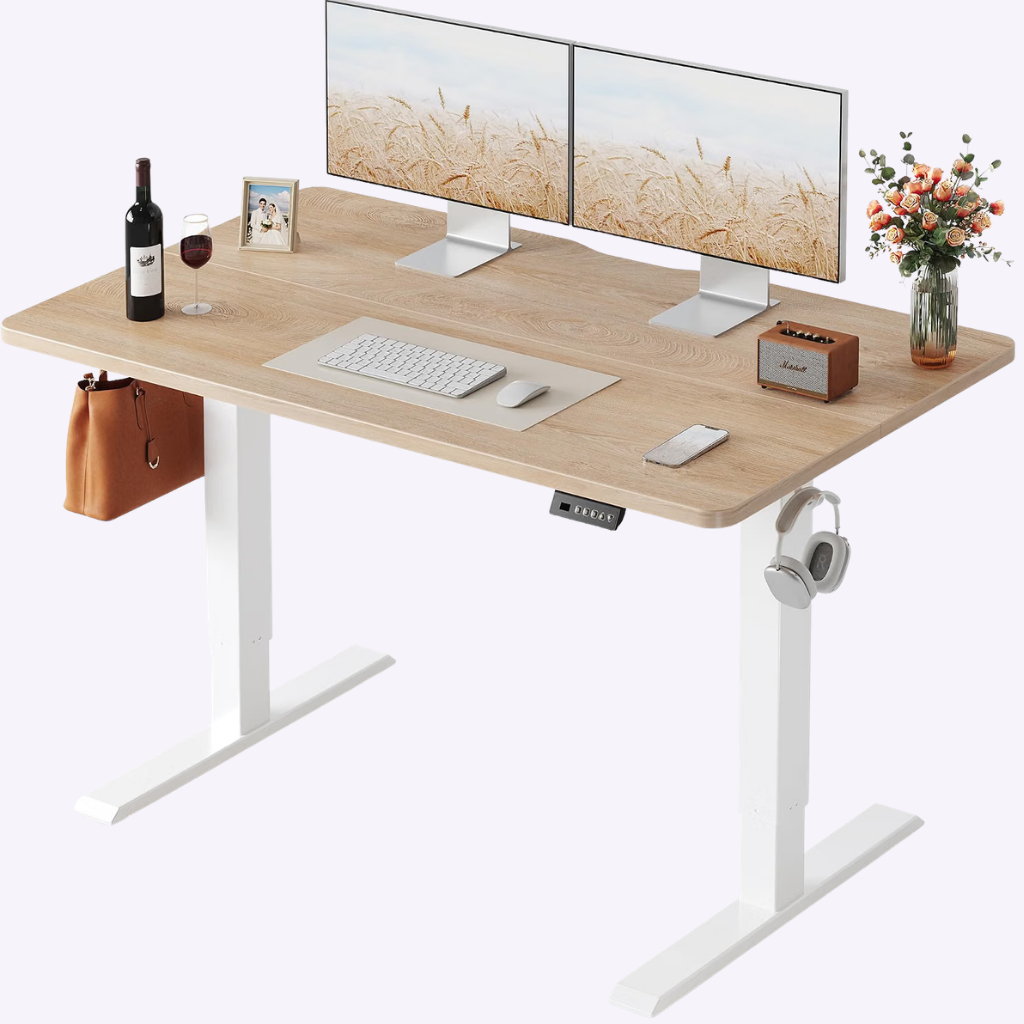
Built the same way as the ErGear: what the listing calls a "Powerful Motor"—singular—rated for 50,000 lift cycles and under 45 decibels of operating noise, again capped at 176 pounds, with three memory presets. FEZIBO's own site sells a nearly identical-looking desk a few clicks away that's explicitly labeled "Dual Motor": same general silhouette, higher price, different internals entirely.
Check Price on AmazonClaiks Electric Height Adjustable Desk (48 × 24")
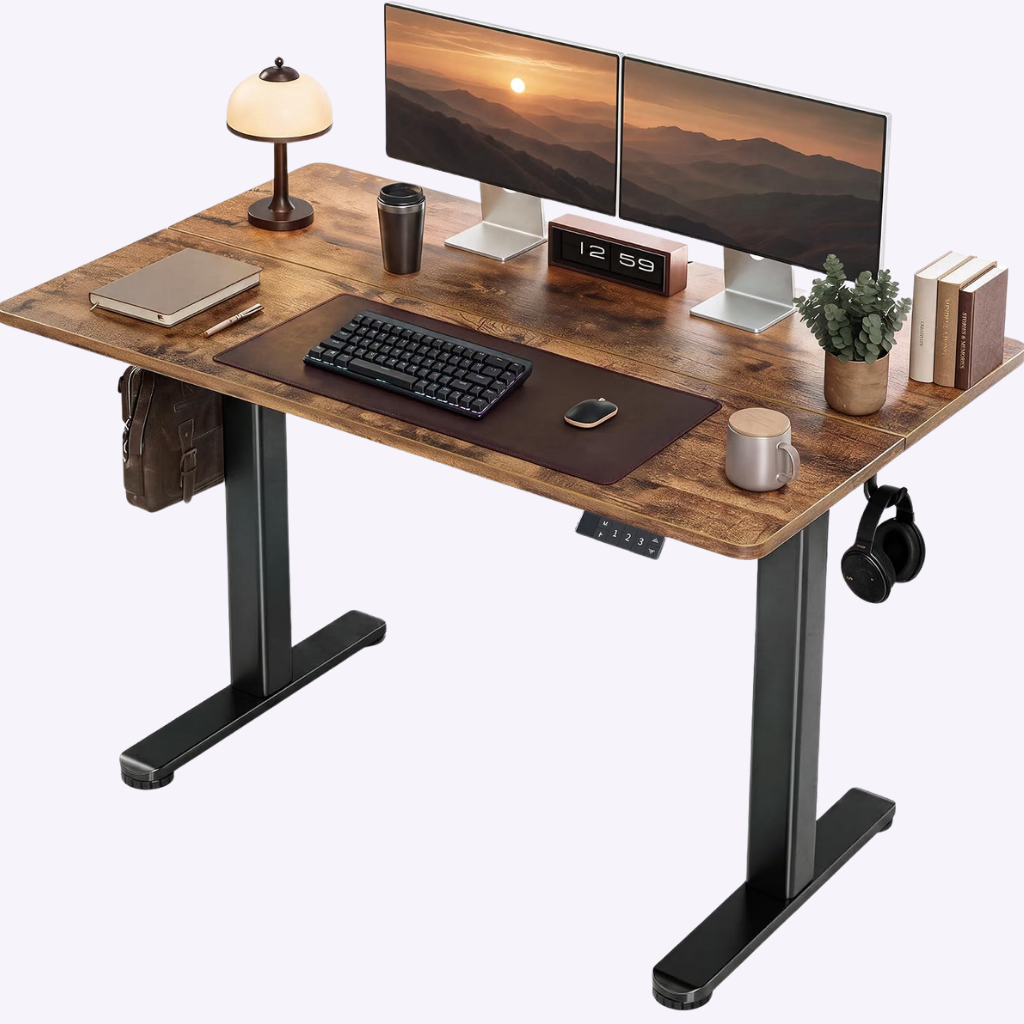
Rounds out the pattern: 176-pound capacity, three presets, a rounded-edge steel frame, and the same transmission-rod assembly step as the ErGear. Claiks also sells a separate "Dual Motor Electric Standing Desk Frame"—a different product built around a T-shaped alloy frame rated to 220 pounds—for buyers who specifically want that.
Check Price on AmazonAt a Glance: How They Stack Up
| Desk Model | Motor Architecture | Weight Capacity | Height Range | Desktop Size | Memory Presets |
|---|---|---|---|---|---|
| ErGear 47.2" | Single, sync rod | 176 lbs | ~28.3" - 46.5" | 47.2" × 23.6" | Yes |
| FEZIBO 48" | Single ("Powerful Motor") | 176 lbs | 28.3" - 46.5" | 48" × 24" FSC wood | 3 |
| Claiks 48" | Single, sync rod | 176 lbs | 28.3" - 46.5" | 48" × 24" | 3 |
Who a 176-Pound Single-Motor Frame Actually Fits
For the reader most likely to care about this—someone at a desk six to ten hours a day, often across two monitors or a monitor arm, dealing with the kind of sedentary fatigue that makes a "permanent" desk feel worth paying for—the honest guidance from motor manufacturers and desk brands points the same direction. A 176-pound single-motor frame handles a laptop and one display without complaint. It's working close to its ceiling the moment a second monitor, an arm, or a real multi-monitor setup joins the desktop, and that's precisely where wobble shows up first. That's not a knock on these three desks. It's a reason to add up what's actually going on top of the desk before assuming any 176-pound frame, from any brand, is the last one you'll need to buy.
Quick Spec Check: Weight capacity is the fastest tell (under roughly 180 pounds generally means single motor; 220 pounds and up generally means dual), and the phrase "dual motor," when a brand has actually earned it, tends to show up unprompted, right in the title.
The Real Spec Sheet Is the One That Isn't There
None of this is really about desks, in the end. It's about what happens when a purchase that used to mean walking into a showroom and pressing on the thing yourself gets compressed into a product photo, a bullet-point list, and a star rating. The showroom used to do the honest work of letting your hands catch what the copy left out. Online, that job falls entirely on the spec sheet, and the spec sheet only tells you what the brand decided to put there.
That's not a reason to distrust every listing. It's a reason to read the boring parts—weight capacity, motor count, the actual dimensions—with the same attention usually reserved for the price. The desk that doesn't wobble at standing height, eight hours into a real workday, was never going to be the one with the best photo. It was always going to be the one where somebody checked the spec that wasn't in the photo at all.